
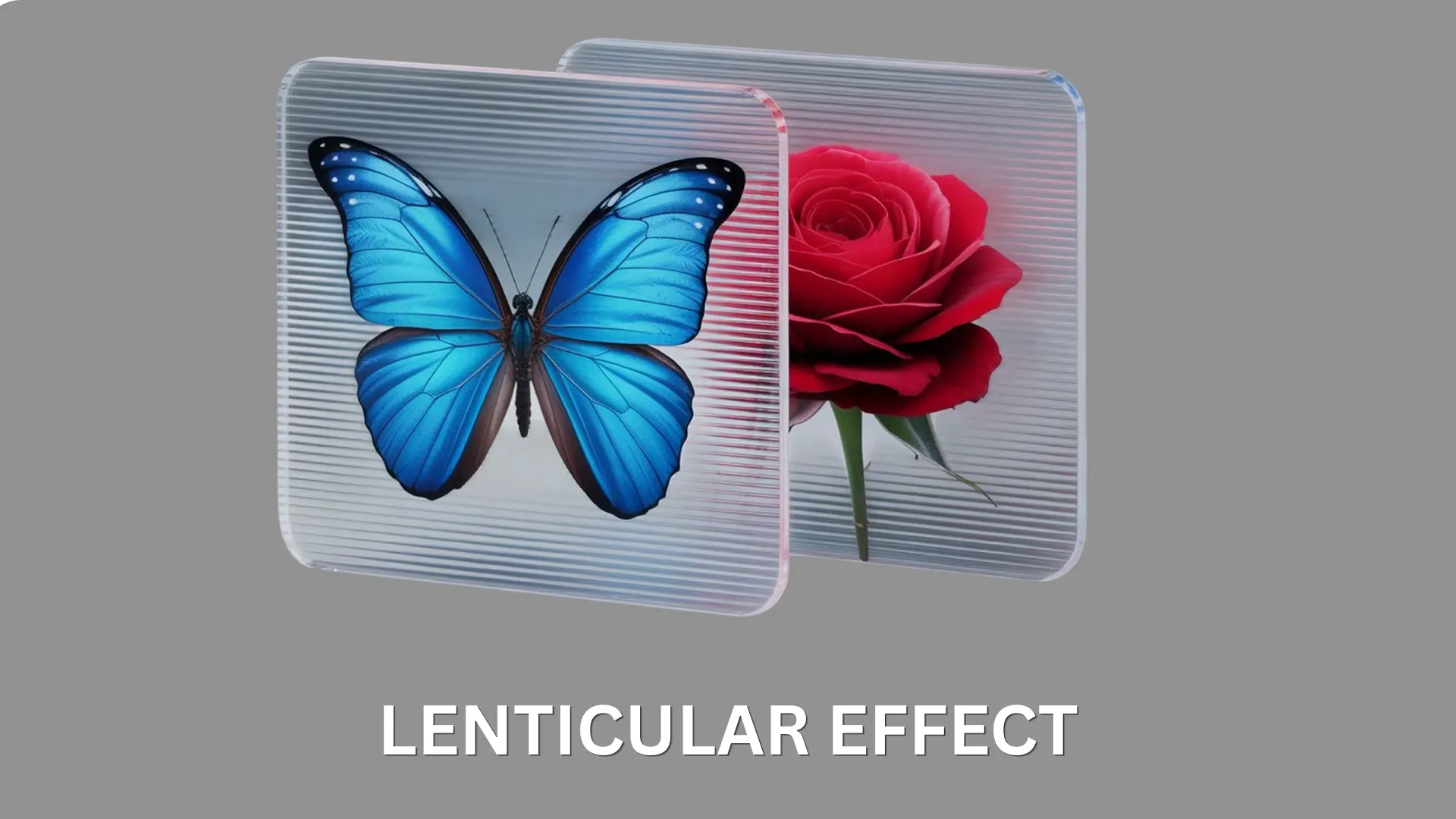

The lenticular effect is one of the most interesting visual techniques used in printing, packaging, advertising, collectibles, and design. Many people recognize the effect instantly even if they do not know its technical name. It appears in images that seem to move, shift, animate, or change depending on viewing angle.
The popularity of images that change depending on angle has existed for decades in toys, posters, trading cards, magazine covers, and product packaging. Today, the lenticular effect is also used in modern advertising, art installations, promotional displays, and creative design projects because it attracts attention very quickly.
The visual illusion works by combining specially printed images with a lenticular lens sheet made from rows of tiny plastic lenses. As the viewing angle changes, different parts of the image become visible, creating motion, depth, or transformation effects.
What Is the Lenticular Effect?
The lenticular effect is a printing and visual illusion technique that creates images appearing to move or change when viewed from different angles.
The effect is produced using a lenticular lens sheet placed over specially prepared artwork.
Tiny plastic lenses redirect light differently depending on viewing position. This allows separate image frames to appear at different angles.
As viewers move side to side, the image may:
- Animate.
- Transform.
- Shift position.
- Reveal hidden pictures.
- Create 3D depth.
The technology combines optics and image design to create interactive visual experiences without digital screens.
How Lenticular Images Work
Lenticular images work through carefully aligned printed image strips hidden beneath a transparent plastic lens layer.
Each lens focuses on different image segments depending on viewing angle.
When a person moves left or right, different image frames become visible to the eyes.
This creates the illusion of movement, depth, or transformation.
The process requires extremely precise printing alignment because even small positioning mistakes can distort the effect.
Modern digital printing technology greatly improved lenticular image quality compared to earlier versions.
Images That Change Depending on Angle
One reason the lenticular effect became so popular is because people naturally enjoy interactive visuals.
Images that change depending on angle feel surprising and engaging because the artwork responds to viewer movement.
These visuals often appear magical to people unfamiliar with the technology.
Common examples include:
- Sports trading cards.
- Movie posters.
- Toy packaging.
- Collectible souvenirs.
- Advertising displays.
- Children’s books.
- Art installations.
The effect captures attention quickly, making it valuable for both entertainment and marketing.
The History of Lenticular Technology
Lenticular image concepts date back more than a century.
Early experiments involving depth and changing image illusions appeared during the late 1800s and early 1900s.
However, lenticular printing became more commercially popular during the mid-20th century when printing technology improved.
Toy companies, cereal brands, and entertainment products helped introduce the effect to larger audiences.
Many people remember lenticular images from childhood products such as collectible cards or animated bookmarks.
The technology continued evolving as digital printing became more advanced.
Types of Lenticular Effects
Several different visual effects can be created using lenticular printing techniques.
Each effect changes how viewers experience the image.
Flip Effect
The flip effect switches between two or more completely different images based on the viewing angle.
For example, one angle may show one photograph while another angle reveals a different image entirely.
This is one of the simplest and most common lenticular styles.
Animation Effect
Animation effects create movement illusions by displaying multiple image frames in sequence.
As viewers move, the picture appears animated.
Short motion loops like blinking eyes, moving objects, or waving gestures are commonly used.
3D Depth Effect
The 3D effect creates visual depth without requiring special glasses.
Foreground and background layers appear separated in space, creating dimensional realism.
This style became especially popular in posters and collectible artwork.
Morph Effect
Morph effects gradually transform one image into another.
A face may slowly change into another face, or one object may transform into something completely different as the viewing angle changes.
Why Lenticular Images Feel Fascinating
Human vision naturally reacts strongly to movement and depth.
The lenticular effect feels fascinating because it creates visual surprise using physical printed materials instead of digital screens.
Viewers expect static printed images to remain unchanged, so angle-based movement creates curiosity immediately.
The effect also feels interactive because the image changes based on viewer movement.
This personal interaction increases emotional engagement with the artwork or product.
Lenticular Printing in Advertising
Advertising companies frequently use lenticular printing because it grabs attention quickly.
In busy environments filled with static visuals, moving or changing images stand out strongly.
Retail stores, movie campaigns, and product launches often use lenticular displays to attract customer attention.
The technology creates memorable visual experiences without requiring electricity or digital screens.
This combination of motion and print remains highly effective for marketing campaigns.
Lenticular Effects in Art
Artists also use lenticular techniques creatively.
Some contemporary artists explore themes involving time, motion, identity, and perspective through changing images.
The effect allows artwork to evolve visually depending on how viewers move around the piece.
This creates a more interactive relationship between the audience and the art itself.
Lenticular art installations often appear in galleries, museums, and public exhibitions.
Movie Posters and Entertainment Collectibles
Entertainment companies helped popularize the lenticular effect globally.
Movie posters using 3D depth or animated visuals became collectible items among fans.
Trading cards featuring athletes, superheroes, or animated characters frequently used angle-changing effects during the 1990s and early 2000s.
Collectors appreciated the interactive and visually unique appearance compared to standard printed cards.
Packaging Design and Retail Products
Lenticular technology is also used in packaging design.
Toy boxes, beverage labels, cosmetic products, and promotional merchandise sometimes include lenticular surfaces to create more eye-catching shelf presence.
Packaging that moves or changes visually often attracts more consumer attention than flat designs.
This marketing advantage explains why brands continue experimenting with lenticular printing in retail environments.
Educational and Scientific Uses
Lenticular technology also has educational uses.
Science exhibits, anatomy models, astronomy displays, and educational posters sometimes use lenticular depth effects to explain concepts visually.
3D visual presentation can make information feel easier to understand and more engaging for students.
Museums and learning centers occasionally use lenticular images to create interactive educational displays.
The Role of Precision in Lenticular Printing
Creating high-quality lenticular images requires precise technical alignment.
Designers must carefully calculate lens spacing, viewing angles, image slicing, and print positioning.
Even small printing errors can ruin the illusion completely.
Modern software helps designers prepare image frames accurately for lenticular production.
Specialized printers and materials are often required for professional-quality results.
Lenticular Printing vs Digital Animation
One reason the lenticular effect remains interesting today is because it creates motion without digital screens.
Unlike phone displays or video animations, lenticular images rely entirely on physical optics and printed materials.
This mechanical simplicity gives the effect a unique charm.
Viewers often appreciate the tactile and physical nature of the illusion compared to purely digital experiences.
Why Children Love Lenticular Images
Children often react strongly to angle-changing images because the motion feels surprising and playful.
Many toys, stickers, and collectible products aimed at younger audiences use lenticular effects to create excitement.
The illusion feels interactive without requiring batteries or electronics.
This playful visual behavior helped make lenticular products especially popular in children’s entertainment markets.
Challenges of Lenticular Printing
Despite its visual appeal, lenticular printing also has limitations.
Production costs are usually higher compared to normal printing.
Image preparation can become technically complex.
Viewing angles may sometimes feel limited depending on lens quality.
Large-scale lenticular displays also require careful lighting conditions for best results.
Even with these challenges, the unique visual experience continues making lenticular technology valuable.
Modern Uses in Creative Design
Modern designers continue experimenting with lenticular effects in creative industries.
Fashion campaigns, music album covers, gallery art, and luxury packaging increasingly use angle-changing visuals.
The combination of physical print and optical illusion still feels innovative even in digital-focused culture.
This lasting visual uniqueness helps keep lenticular design relevant today.
Why the Lenticular Effect Still Feels Special
Many visual technologies become ordinary after widespread use, but lenticular images still feel surprising because they respond directly to physical movement.
The illusion creates a sense of discovery and interaction.
People naturally move images back and forth repeatedly to observe the transformation effect.
This playful interaction helps explain why lenticular visuals remain memorable across generations.
Conclusion
The lenticular effect is a fascinating visual printing technique that creates images that change depending on angle through the use of specially designed lens sheets and image alignment. From animated posters and 3D artwork to collectible cards and advertising displays, lenticular technology continues attracting attention because it combines movement, depth, and physical interaction in unique ways.
The effect became popular across entertainment, packaging, marketing, education, and art because people naturally respond strongly to motion and visual transformation. Even in a digital age filled with screens and animation, lenticular printing still feels creative and visually impressive because it produces changing images using purely physical materials and optical design.
FAQs
The lenticular effect is a visual printing technique that makes images appear to move, transform, or create depth when viewed from different angles.
Lenticular images work by combining specially printed image strips with transparent plastic lens sheets that reveal different image parts depending on viewing angle.
Lenticular printing is commonly used in trading cards, movie posters, toy packaging, advertising displays, collectibles, educational materials, and art installations.
The main types include flip effects, animation effects, 3D depth effects, and morph effects that transform one image into another.
Advertising companies use lenticular printing because moving and angle-changing visuals attract attention quickly and create memorable marketing experiences without digital screens.
Lenticular images remain special because they combine physical print with optical illusion, creating interactive visuals that respond directly to viewer movement.